
CRM and manufacturing case study
A joined-up CRM and production platform for a made-to-order retailer
We built a custom web application that connects customers and quotations with orders, production planning, stock, purchasing and fulfilment.
Project overview
01 — The brief
Making the whole order visible, from first quote to final delivery
In a made-to-order business, a sale sets an entire operational chain in motion. Customer-specific prices, product components, available stock, supplier orders, production time and dispatch dates all affect whether the promise can be kept.
The client needed more than a conventional CRM or online order list. They needed an end-to-end order management system that could turn commercial information into practical production work, while giving staff a dependable view of customers, materials and deadlines.
02 — The challenge
Every order carries its own operational detail
The platform had to preserve customer and product flexibility without making planning, stock allocation or shop-floor work unnecessarily complicated.
Customer-specific sales
Manage multiple contacts, delivery addresses, agreed pricing and products associated with each customer.
Production deadlines
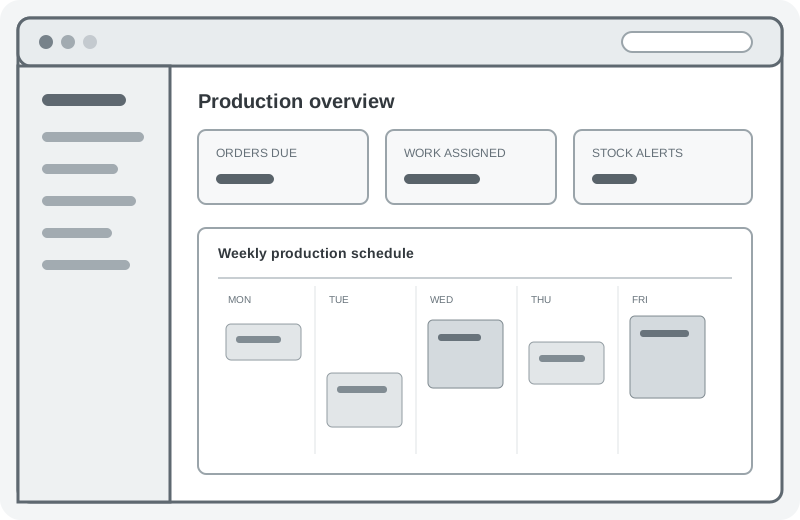
Coordinate booking-in, manufacturing, completion and shipping dates through a practical weekly schedule.
Component availability
Calculate requirements, allocate materials and flag short stock before shortages interrupt production.
Different staff responsibilities
Give sales, production, stock, management and administrative users the correct tools and permissions.
03 — The solution
One platform built around the business
We developed a central operations application covering customer relationships, sales orders, production, inventory, purchasing and staff administration.
Instead of treating these as isolated modules, the system keeps the relationships between them. An order can drive component requirements, stock allocation, production dates, delivery paperwork and invoicing from the same underlying record.
- Role-specific dashboards and controlled access
- Shared information from customer quote to invoice
- Responsive views for office and shop-floor teams
Shared operations data
Customers · orders · products · people
CRM and sales
Order fulfilment
Production
Stock control
Purchasing
Staff administration
04 — A typical workflow
From customer quotation to completed order
Connected data allows commercial decisions to flow directly into purchasing, production and fulfilment.
-
1
QuoteProducts and customer-specific prices form the quotation.
-
2
BookThe order, items and key dates enter the production plan.
-
3
PrepareComponents are calculated, allocated or ordered from suppliers.
-
4
ProduceWork is scheduled and progress is updated on the shop floor.
-
5
FulfilLabels, delivery documents and the invoice are generated.
05 — Designed for production teams
Useful on the shop floor, not only in the office
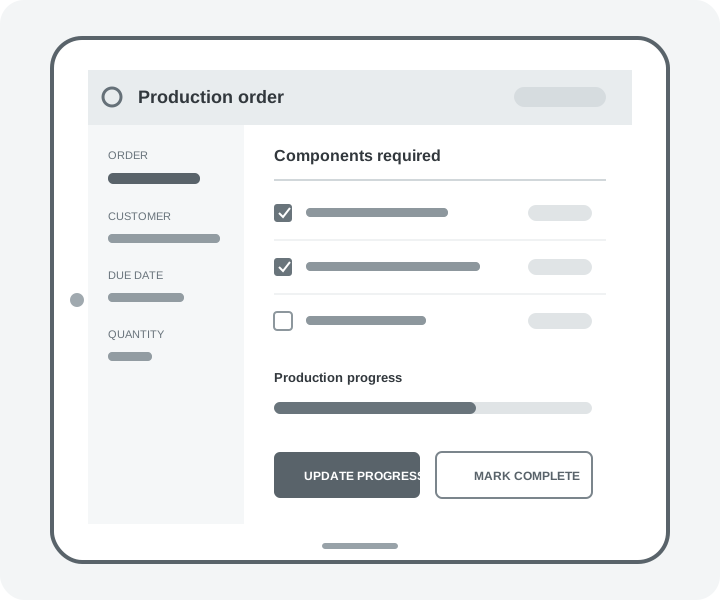
Responsive and tablet-optimised views give production staff a clear picture of assigned work, required components and order progress. The weekly schedule turns important dates into a visual workload that is easier to plan day by day.
Staff can update production activity where the work happens, while dashboards give managers an overview of what is upcoming, assigned or awaiting completion.
06 — Platform capabilities
An end-to-end manufacturing order management system
Customers and sales
Manage customer records, contacts, addresses, pricing, products, quotations and complete order histories.
Order fulfilment
Track items, components and key dates, then generate packing slips, delivery notes, labels and invoices.
Production scheduling
Plan work through weekly and daily views, with assigned production activity surfaced on dashboards.
Inventory and components
Track on-site, off-site and pre-built stock, allocate materials and calculate bill-of-material requirements.
Purchasing
Maintain supplier pricing, create and email purchase orders, and receive stock against each order.
Staff self-service
Support holiday requests and approvals alongside secure access to staff documents and payslips.
07 — Technical foundation
A secure operations application
The application is built on a proven web framework with a relational database. Role-based access control governs staff, managers, stock editors and administrators, while dedicated reporting uses structured data queries and exports.
Responsive interface patterns support desktop, tablet and mobile use. Server-side services handle PDF documents, email delivery, image processing, backups and error logging.
08 — The outcome
A single operational picture from sale to production
The completed platform gives the retailer and manufacturer one place to coordinate customer demand, materials, people and deadlines across the full order lifecycle.
Connected operationsCustomer, order, component, supplier and fulfilment records remain linked throughout the process.
Clearer planningVisual schedules and key dates make upcoming production work easier to understand and assign.
Stock visibilityAllocations, shortages and different stock states are visible alongside order requirements.
Consistent outputOperational data drives labels, purchase orders, delivery paperwork, invoices and reports.
Have a process that has outgrown spreadsheets?
Let’s build one system around the way your business works.
Tell us where information gets stuck. Our initial advice is free.
Talk to us about your project