
Web application development case study
Facilities management software for a multi-site hospitality business
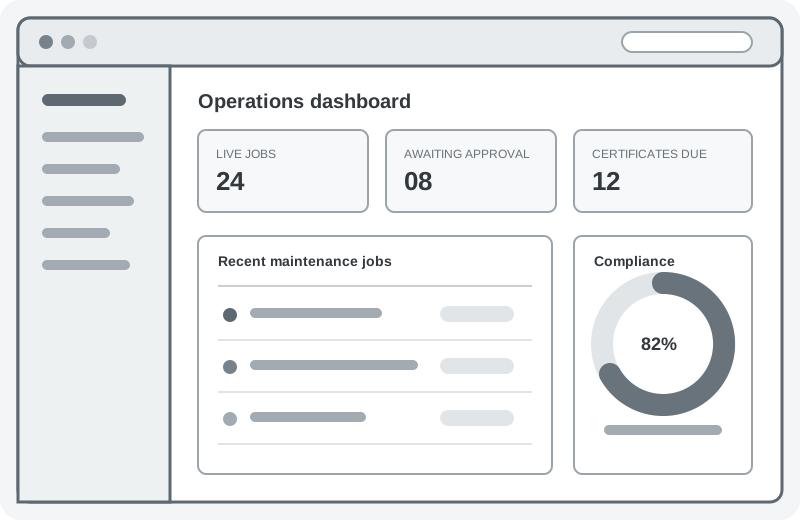
We built a secure web platform that brings maintenance jobs, contractor activity, compliance documents and invoicing into one joined-up system.
Project overview
01 — The brief
Connecting every part of a busy hospitality estate
Managing maintenance across many venues involves far more than logging a broken appliance. Site managers need a quick way to ask for help, the central team needs control and visibility, and contractors need clear instructions wherever they are working.
The client needed a custom facilities management web application that could support each of those people without forcing them through the same interface. It also had to keep certificates, quotations, invoices and audit information connected to the relevant site and job.
02 — The challenge
One operation, several very different users
A maintenance request passes through several hands. Each person needs the right information and actions, while the business needs a reliable record of what happened.
Multiple venues
Give each site a focused view while preserving estate-wide control for central and regional teams.
External contractors
Let suppliers accept work, record progress and submit documents without exposing internal administration.
Compliance deadlines
Make missing, expiring and awaiting-approval certificates visible before they become a problem.
Financial oversight
Keep quotations, job costs and invoice decisions attached to the work that generated them.
03 — The solution
A tailored portal for every role
We designed the platform around six connected workspaces: administration, individual sites, groups of sites, suppliers, maintenance tracking and system administration.
Shared data keeps everyone aligned, but role-based permissions ensure each user sees a clear dashboard and only the actions relevant to their work.
- Focused dashboards for operational and management teams
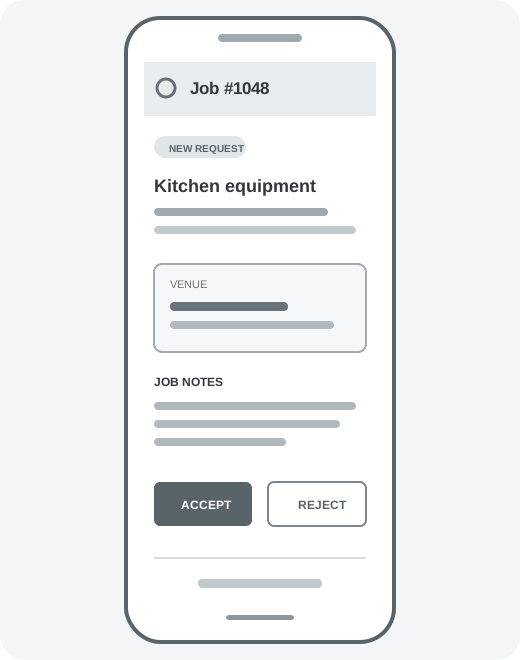
- Mobile-friendly contractor workflows for use on site
- Central records for jobs, documents, approvals and activity
Shared platform
Jobs · sites · documents · costs
Administration
Site teams
Group oversight
Suppliers
Job tracking
System admin
04 — A typical workflow
From maintenance request to approved invoice
The job lifecycle gives every team a clear next step while retaining the complete history of the work.
-
1
LogA venue raises a maintenance request.
-
2
AssignThe central team reviews and selects a contractor.
-
3
AcceptThe supplier responds through the portal or email.
-
4
CompleteOn-site progress and worksheets are recorded.
-
5
ApproveCompletion details and the invoice are checked.
05 — Designed for work on site
Fewer barriers between the job and the system
Contractors can receive and respond to job requests, update progress and upload supporting information from a phone. QR-code workflows help them identify the right job while they are at a venue, reducing the need to search through administrative screens.
Transactional emails also support direct accept-or-reject actions, helping urgent requests keep moving even when a contractor is away from a desk.
06 — Platform capabilities
More than a maintenance job tracker
Job management
Raise, assign, accept, reject, change, complete and archive work, with notes, estimates and worksheets.
Compliance tracking
Upload and approve certificates, monitor expiry status and report on missing evidence by site or discipline.
Invoices and quotations
Submit, approve, dispute and archive invoices while retaining quotations and job-cost history.
Supplier directory
Manage contractors, service categories, venue coverage and supplier-to-site relationships.
Reporting
Review live work, outstanding approvals and trends by site, supplier, status or financial year, with data export.
Communication
Keep users informed with transactional email, in-app messages and integrations for operational alerts.
07 — Technical foundation
A secure, maintainable web application
The server-rendered platform uses a proven web framework with structured data access and secure authentication. Its multi-tenant, role-based architecture separates the experience for each audience while keeping core operational data connected.
08 — The outcome
A clearer view of maintenance across the estate
The completed platform gives the hospitality operator one place to coordinate venues, contractors, compliance and costs without losing the role-specific experience each team needs.
Better visibilityLive work and outstanding decisions are surfaced through focused dashboards.
Stronger traceabilityJob changes, documents, messages and approvals remain connected and auditable.
Simpler collaborationSite teams, administrators and suppliers work from the same operational record.
Proactive complianceExpiry views make due and out-of-date certification easier to identify.
Have a complicated process?
Let’s turn it into a web application people enjoy using.
Tell us what is slowing your team down. Our initial advice is free.
Talk to us about your project